




Yeshiva University Belz Building
Manhattan, NY
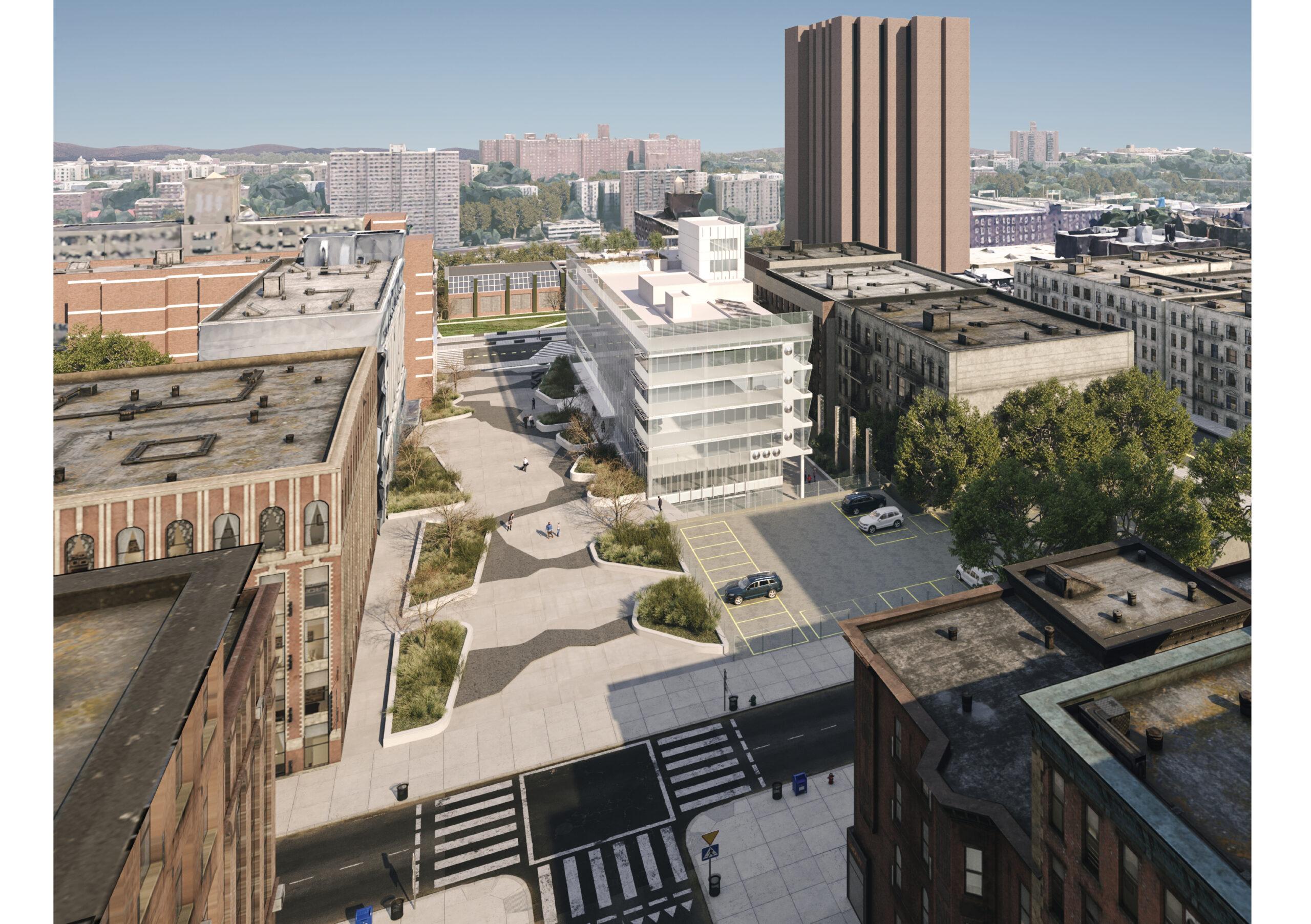
A design that respects and speaks to YU’s past, while establishing its physical presence as a world-class 21st century institution.
MPA’s proposed design mobilizes the recladding of the Student Center (Belz Building) at Yeshiva University to embrace access, openness and verticality, unifying existing and future buildings into a coherent urban campus. While the existing envelop speaks to a simple pancake structure, the design for the façade moves beyond the idea of a cladding, uncovering synergies between program, site and institutional vision. This process began by studying the interior disposition of programs, identifying spatial and programmatic opportunities that could open access, and rescale visibility and collective use of the space, situating it within its broader urban context.
The façade is conceived as a high-performance system that integrates thermal comfort, sun control, daylighting, and air quality. Beyond technical performance, the curtain wall’s verticality operates as an active interface between interior program and campus life, supporting the Success Center, gallery, and student spaces. The recladding transforms a utilitarian envelope into a responsive and legible system that enhances both performance and identity.
Project Year
2024
Project Phase
Construction Documentation Completed
Project Team
Client: Yeshiva University
Facade Consultant: Buro Ehring
Interior Architect: Applied Design Initiative
Programmatic engagement of multiple scales
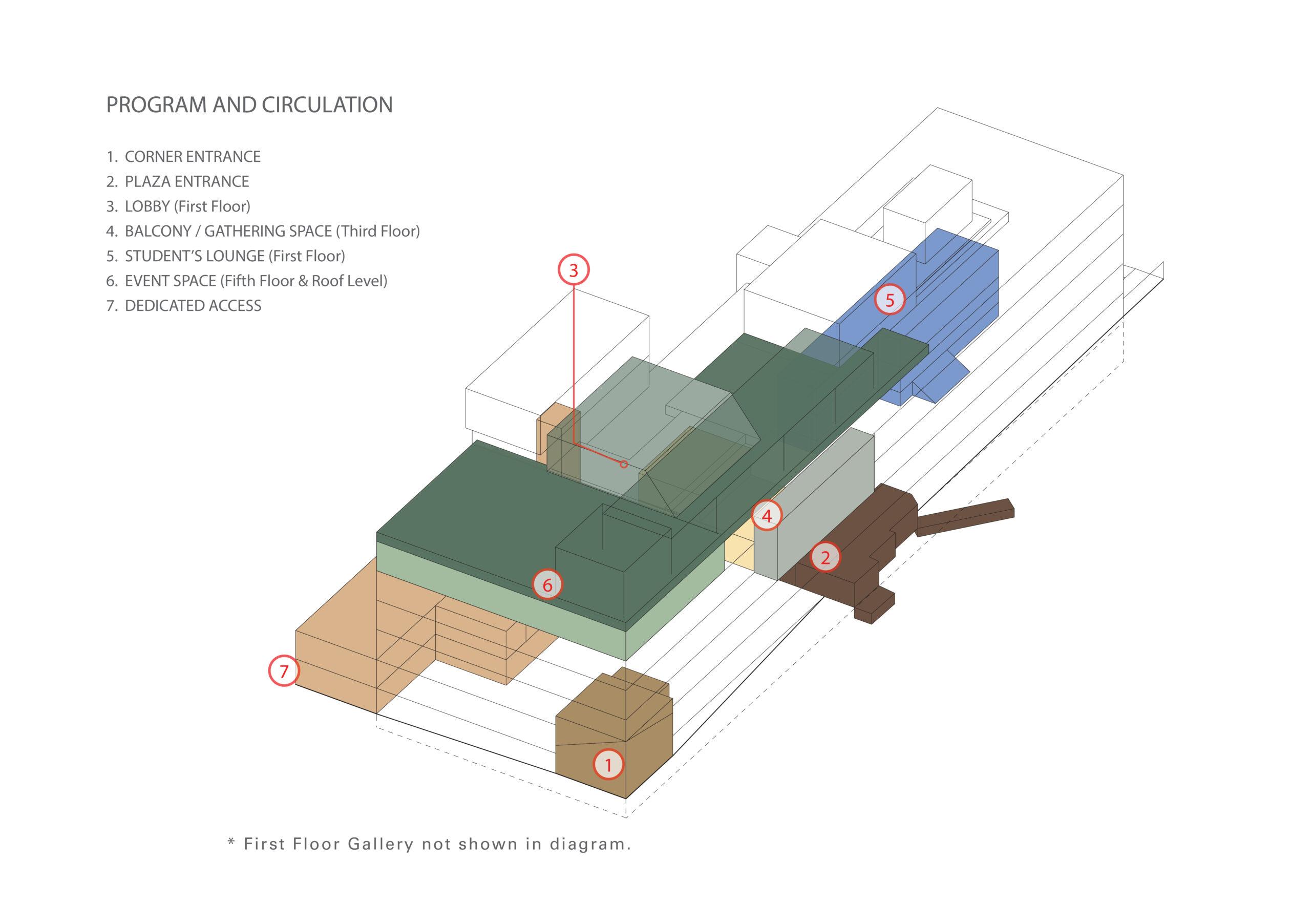
MPA identified 7 programmatic opportunities that engage the façade’s verticality to open up, rescale, and create transparency.
- A new CORNER ENTRANCE at Amsterdam Avenue strengthens the building’s identity at the intersection of campus and city.
- A redesigned PLAZA ENTRANCE is made visible and accessible by regrading a new level walkway and setting back a glazed surface to create a deep entry porch.
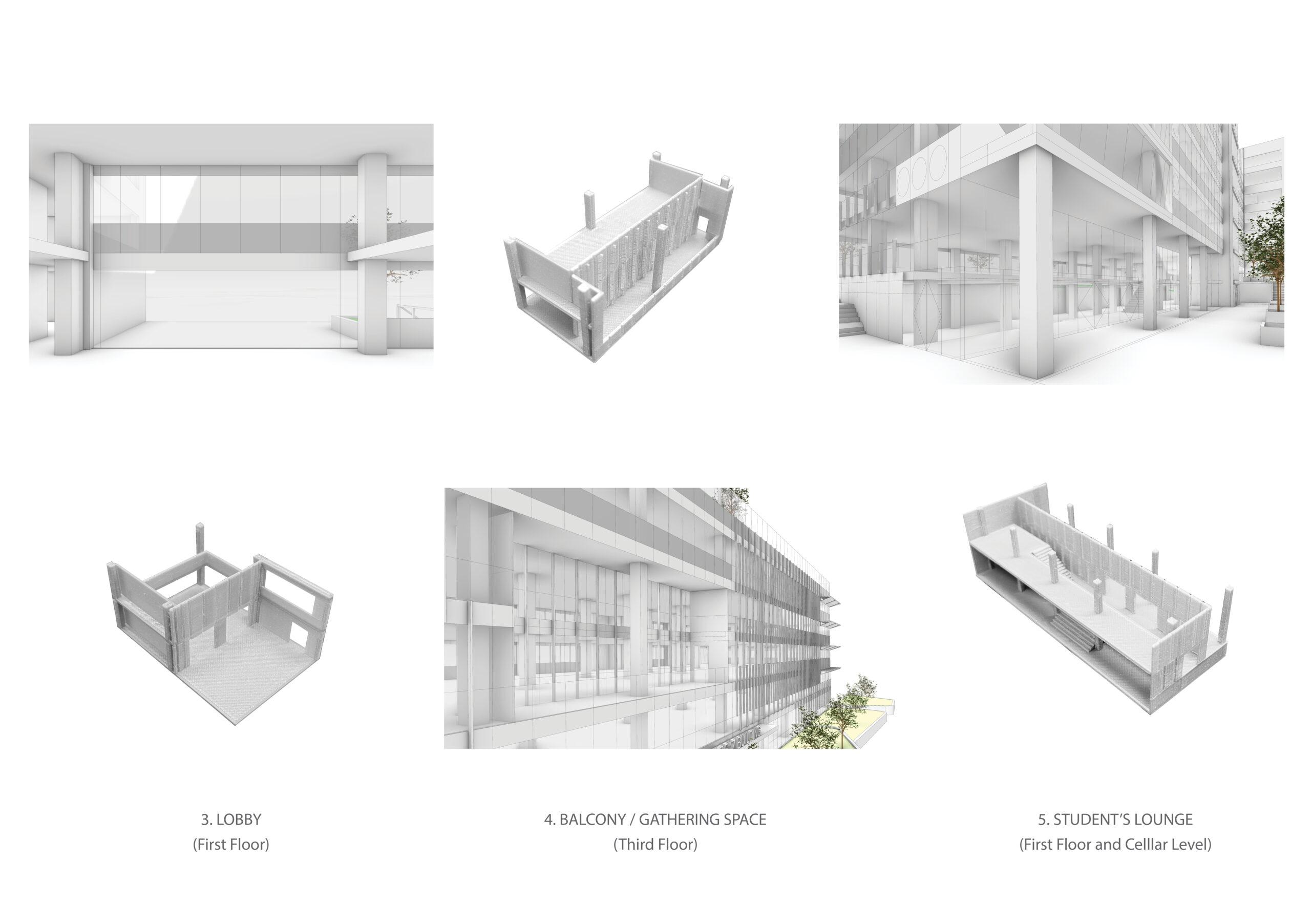
- A double height LOBBY creates visual continuity from front plaza to rear garden, bringing light through the depth of the building.
- A double-height BALCONY / GATHERING SPACE at the 3rd and 4th floors creates a window on the plaza, introducing light into a new shared space.
- A new STUDENT LOUNGE at the southwest portion of the first floor connects to the South Garden below. An open stair and reflective treatment of the South façade would enhance lighting in this dynamic space.
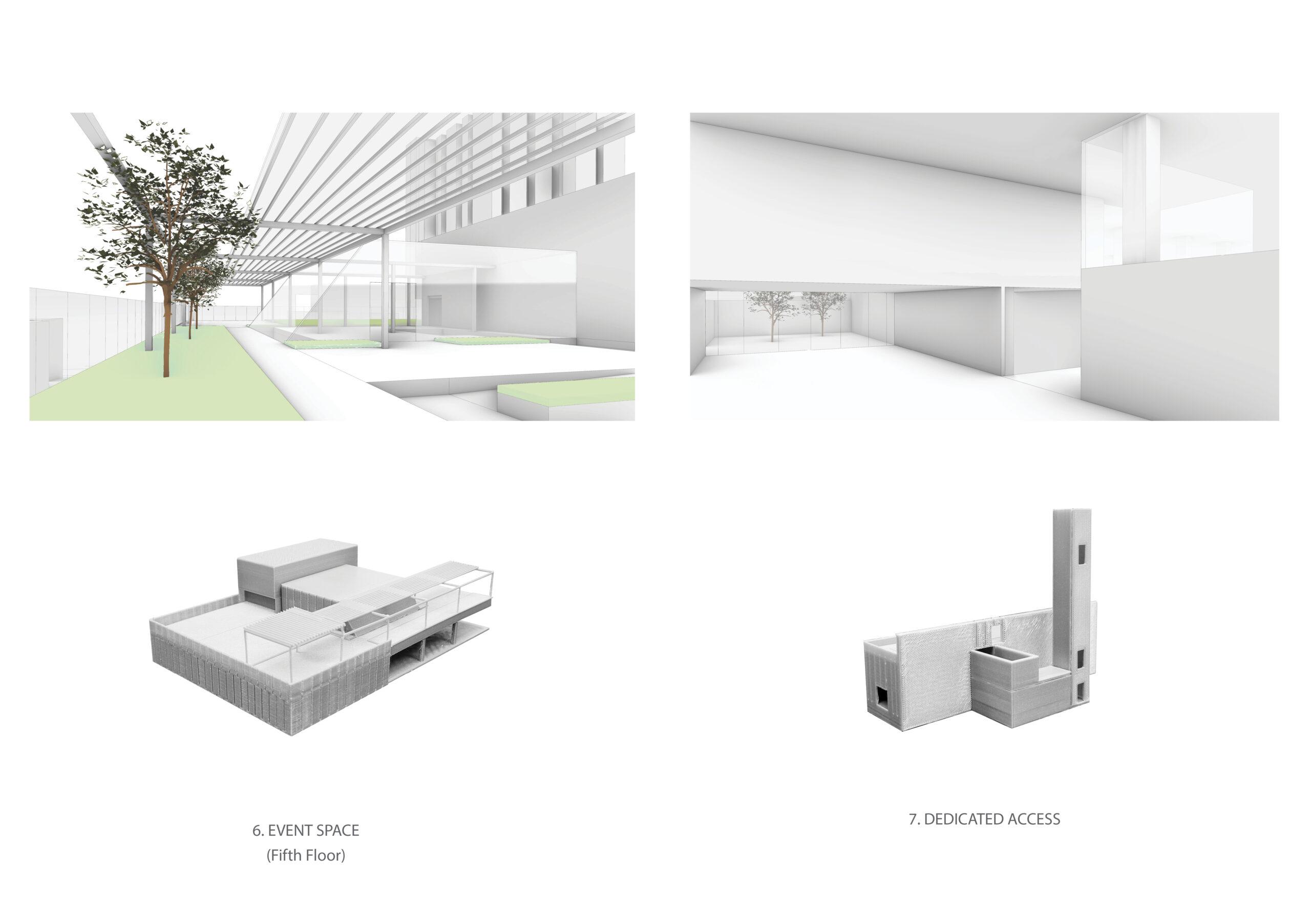
- An enhanced fifth floor EVENT SPACE acts as a glowing lantern on Amsterdam Avenue and from afar, a shift in spirit of the building’s identity within its urban context.
- A DEDICATED ACCESS entrance from the university-owned lot to the south connects to the fifth-floor event space and roof terrace.


Ground and Circulation
Approaching our design with the concept of a campus gave us a framework for consideration of scale. There is an opportunity to look at the DOT Plaza in conjunction with other outdoor spaces, including across Amsterdam Avenue, to visually integrate these into a kind of urban campus quadrangle, anchoring individual buildings and drawing them into new relationships. Taking advantage of the site’s slope, a level walkway extends along the façade, leading to a recessed glazed entry that forms a sheltered porch while preserving existing trees. The ground level establishes a new accessible and visible point of entry, making interior programs more visible and inviting, thus redefining the relationship between the Belz Building and its surrounding context.


Urban Presence
The recladding of the building increases its openness and accessibility on all four sides, in relation with a sequence of communal spaces within. It reinforces the role of the DOT Plaza, towards creating a campus that extends across Amsterdam Avenue, leveraging the existing Danciger Quadrangle. In the future, this can be further expanded through a direct relation with the park along the Harlem river, by reaching beyond Strenger Residence Hall across Laurel Hill Terrace, and establishing a connection between the campus and the urban scale. The proposed fifth floor event space will be an iconic beacon of light, enhancing the institution’s visibility from the Bronx across the river, alongside the tower of Zysman Hall.


Envelope Alternatives
The brief required proposing three alternatives. MPA’s proposed alternatives reframe the experience of the building from a flat envelope, to be perceived more volumetrically.
The CURTAIN WALL system incorporates diversity in the width of spandrel glass horizontal bands, with differently spaced extruded mullions mounted on the glazing surface, including fritting to modulate glass transparency. It introduces variations into an otherwise homogeneous cladding system, wrapping a large volume.
The PRECAST façade operates at two scales of folding surfaces in repetitive units, defining a middle scale of areas through frames that suggest their grouping. The frames create a module that offers texture, where the repetitive logic of elements enriches the building’s surface, while also delineating the scale of openings.
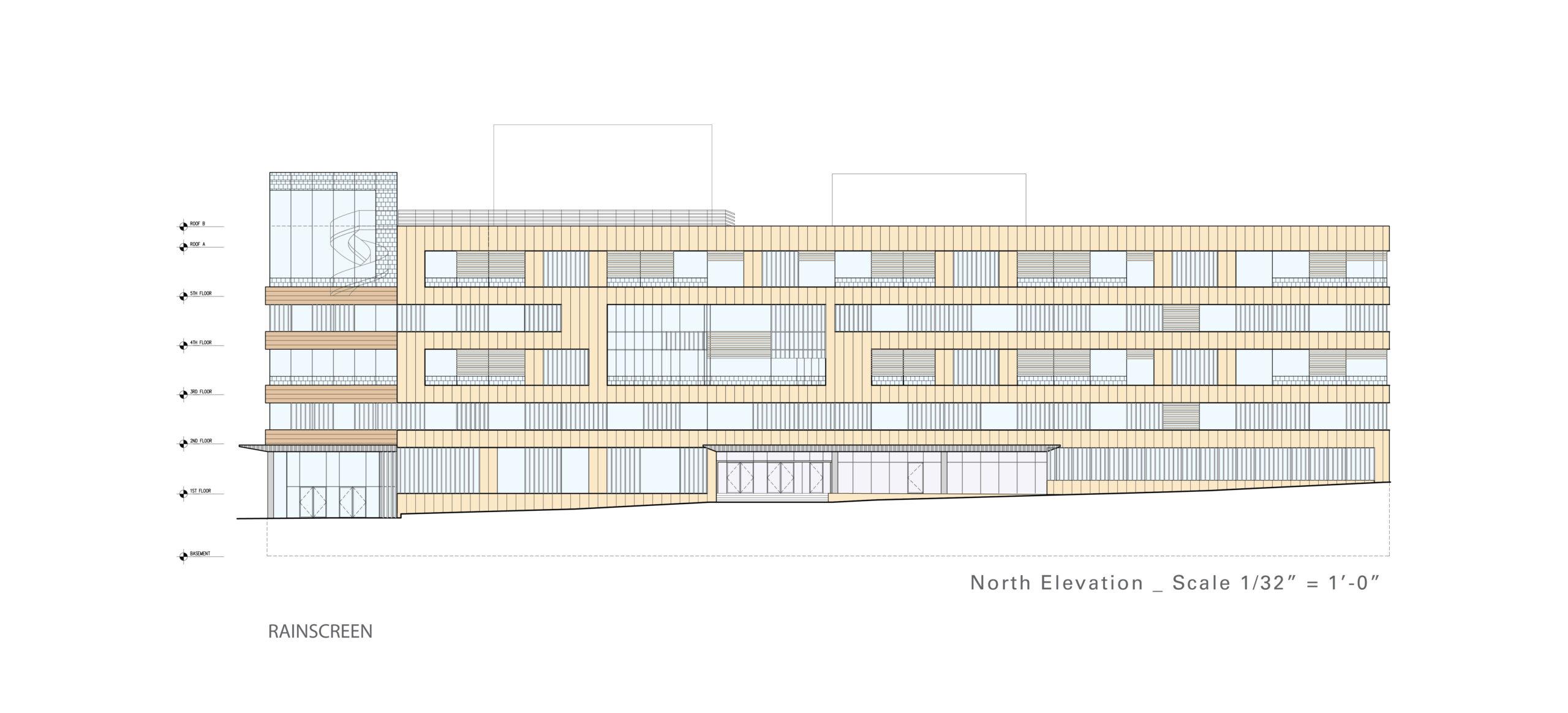
The Terracotta RAINSCREEN façade system incorporates punctuated openings defined projecting frames orients individual units by interweaving horizontal and vertical elements of the same material. It plays with the degrees of transparency through compatible secondary elements.



Curtain Wall Development
The selected Curtain Wall system introduces a set of overlays and variations that respond to the identified programmatic opportunities to engage multiple scales. The north wall has a system weaving rhythmic overlays of extruded mullions on the surface, creating the perception of areas with different intensity. When the glazing turns the corner from the north to the west façade, a system of louvers takes the place of the extruded mullions, addressing the performance requirements set by the sun’s daily movement. The east wall expresses the presence of an events room above the corner of Amsterdam Avenue, through a different scale of glazing that wraps its full width. The design brings measure to the building through a patchwork of perceptual densities acknowledging different performance standards, such that the building’s full volume responds to the opportunities to create special places.


